


29.8.13
Virilio - Signature

Refraction without the appearance of
colour.
Credits
Corinna Triantafyllidis: tympani,
tamtam, synthesizer, drum machine, voice.
Dimitris Papadatos: electronics,
guitar, turntables, synthesizer, voice.
Recorded in Acacia Studio – Athens
Greece (2013)
Written & Performed by Virilio.
Produced by Dimitris Papadatos &
Corinna Triantafyllidis.
Mastered by Martijn Comes.
Thanks: Constantine, Martijn, Daria.
22.8.13
nihilist spasm band 'breaking wind' LP
As nicolas was heading for his roaring
forties birthday, we were wondering whether we should issue a release
to celebrate the occasion or should we throw a party or whatever. On
the one hand lots of radical changes had taken place in the rekem HQ
during the last year and found the four of us in a state of flux. On
the other, a release idea to which you can always return and use as a
sound diary, was bringing shivers from the absurd heyday and
ultimately we couldn't resist the idea of doing one. Whom to invite
for it? Without any second thought, the name of the Nihilist Spasm
Band stuck to our minds. A band of friends who -for nearly half a
century- hold regular Monday-night meetings/improvisations, their
music has been a companion to our explorations in the world of
obscure music, ever since our first encounter with it almost 23 years
ago. And the recording and title the NSB suggested to us couldn't
have fit any better, marking a crossroads in our lives with their
free-as-the-wind sound that will now accompany new journeys.


Michael Adamis Electroacoustic Works

Rekem and Mafia presents:
MICHAEL ADAMIS
A Selection of Electroacoustic Works
1964-1977
(Deluxe 2xCD & booklet)
(rekem03/mafia02)
(Deluxe 2xCD & booklet)
(rekem03/mafia02)
"Absolutely essential release of
one of the most prominent personalities in the music world. Michael
Adamis was recognised as a pioneering composer who created a
contemporary musical genre upon the Greek tradition. He has managed
to create an original electroacoustic soundscape, leaving a clear
aesthetic mark among contemporary and Byzantine music. These works
offer a remarkable example of his pioneering and diverse creative
course, revealing a search for new means of expression. Tape, voice,
distortion, concrete and electronic sounds, use of early synths. For
the first time a Super Deluxe Double CD & Booklet edition is
released with a selection of previously unreleased electroacoustic
works from the 1964-1977 period."
13.7.13

10.7.13
let s go to russia
Δεν πρέπει ποτέ να ξεχνάμε το ηθικό χρέος κάθε ανθρώπου απέναντι στους πολίτες που κατοικουν το σώμα του, αυτόν τον πολυσύνθετο αστερισμό από κόκαλο.
Κυβέρνηση αυτών των πολιτών είναι η ανθρώπινη συνείδηση, που δεν πρέπει ποτέ να ξεχνά πως η ανθρώπινη ευτυχία είναι το σύνολο των κόκκων άμμου της ευτυχίας όλων των υπηκόων της. Ας διαφυλάξουμε τον κόσμο τους κι ας θυμόμαστε πάντα πως κάθε τρίχα στο ανθρώπινο κεφάλι είναι ένας ουρανοξύστης, που απ' τα παράθυρά του χιλιάδες Σόνιες και Κόλιες κοιτούν τον ήλιο.
και
Όμως η εξίσωση της ανθρώπινης ευτυχίας βρέθηκε και λύθηκε μόνο όταν οι άνθρωποι κατάλαβαν πως περιελίσσεται σαν μία αδύναμη κληματαριά γύρω από τον κορμό του κόσμου. Να ακούς το θρόισμα των καλαμιών, να αναγνωρίζεις τα μάτια και την ψυχή ενός φίλου σ' ένα καβούρι που πλαγιοδρομεί στην ακροθαλασσιά με τη δαγκάνα του υψωμένη, δίχως να ξεχνά τους πολεμικούς κανόνες - αυτά δίνουν μεγαλύτερη ευτυχία από όλα εκείνα που φέρνουν δόξα ή τη λαμπρή φήμη ενός, ας πούμε, στρατηλάτη.
Η ανθρώπινη ευτυχία είναι ένας δευτερογενής ήχος. Περιελίσσεται και περιστρέφεται γύρω από τον θεμελιώδη ήχο του κόσμου.
Η ευτυχία είναι το χλωμό φεγγάρι που γυροφέρνει τις Γαίες που κυκλώνουν τον Ήλιο, τα αγελαδίσια μάτια μίας γατούλας που ξύνει τ' αυτί της, τα χαμομήλια την άνοιξη, τον παφλασμό των θαλάσσιων κυμάτων.
Αυτοί είναι οι θεμελιώδεις ήχοι της ευτυχίας, οι σοφοί πατέρες της, η παλλόμενη σιδερένια ράβδος που είναι αρχαιότερη από την οικογένεια των φωνών. Μ' ένα λόγο, ο άξονας περιστροφής της.
Να γιατί τα παιδιά της πόλης, ξεκομμένα από τη φύση, είναι πάντοτε δυστυχισμένα ενώ για τα παιδιά του χωριού η ευτυχία είναι κάτι αξεχώριστο σαν τη σκιά τους.
Ο άνθρωπος άρπαξε την επιφάνεια του Πλανήτη από τη σοφή κοινότητα των ζώων και των φυτών και ζει τώρα μες στη μοναξιά. Δεν έχει κανέναν να παίξει κυνηγητό ή κρυφτό. Στο άδειο δωμάτιο τον περιβάλλει το σκοτάδι της ανυπαρξίας, δίχως συντρόφους, δίχως παιχνίδι. Με ποιόν να διασκεδάσει; Ολόγυρά του ένα κενό "όχι". Οι ψυχές των ζώων, εξόριστες από τα σώματά τους, ρίχτηκαν πάνω του και τώρα οι στέπες του είναι υποταγμένες στο δικό τους νόμο.
Χτίσανε πόλεις των ζώων μές στην καρδιά του.
Θα 'λεγες πως άνθρωπος πνιγόταν από τον ίδιο του τον άνθρακα.
Η ευτυχία του ήταν μια κάσα τυπογράφου απ' όπου έλειπαν πολλά αριθμητικά ψηφία, στοιχεία απαράιτητα για κάθε υπολογισμό, τα δύο, τα τρία. Και χωρίς αυτούς τους αριθμούς το Μέγα Πρόβλημα δεν μπορεί να τεθεί. Τους έπαιρναν μαζί τους στον τάφο τα ζώα αποχωρώντας, τους ατομικούς αριθμούς του κάθε είδους.
Ολόκληρες πράξεις της εξίσωσης της ευτυχίας εξαφανίστηκαν, σαν σκισμένες σελίδες κάποιου χειρόγραφου. Το σκοτάδι έπεφτε απειλητικό.
Αλλά τότε συνέβη ένα θαύμα: θαραλλέα πνεύματα ξύπνησαν τον Ιερό φαιό πηλό που καλύπτει κατά στρώματα τη γη, ξύπνησαν την κοιμωμένη της ψυχή από ψωμί και κρέας. Η Γη και πάλι έγινε τροφή, και κάθε κοιλάδα γιορτινό τραπέζι. Στα ζώα και τα φυτά αποδόθηκε ξανά το δικαίωμα στη ζωή, αυτό το υπέροχο δώρο.
Κι εμείς είμαστε πάλι ευτυχισμένοι: ένα λιοντάρι κοιμάται στα γόνατά μου κι εγώ κάθομαι εδώ καπνίζοντας το αέρινο γεύμα μου.
Βελιμίρ Χλέμπνικωφ, Ζαούμ


29.5.13
23.5.13
Jakob Ullman interview for 06:00am

06: How would you describe your music to someone that has not experienced it?
The music I´m interested in (and so the music I compose I think) is very quiet and of rather long duration. I think one can hear better if one has to concentrate on hearing. But it is a laborious process. Some people become angry about such an imposition.
06: What was your father like?
It`s not easy to answer this question in short terms. I think the best description of my father is, that he was a “survivor”. He survived the Nazi-terror-regime in Germany (with the help of British bombs, otherwise the GESTAPO would have found and killed him). He survived Neonazi-attacks in the early western Germany; he survived prison in East Germany later. With this background he became member of the civil-rights-movement in East Germany and even politician (member of the European Parliament). At the end of his life he tried to survive his deep frustration seeing the recurrence of war in europe and the treason of the European idea and values. He died in 2004.
06: What’s the most valuable lesson you’ve learned from Cage’s work?
The most valuable lesson I learned from John Cage as person: if you want to make music in freedom, you have to follow the instructions of the composers very, very carefully. If you want to compose freedom music you have to imagine (and to prepare) situations which are clear and adequate to practical circumstances of musical practice and – at the end – don´t try to be the owner of your work!
06: Do you find new surprises in sound every day? Are you constantly discovering new sounds?
I´m really sad that it is nearly impossible to discover new sounds every day. The world is too loud!
06: Do you have any expectations at all of the audience that comes to hear your music?
I should say that I have no expectations, but I would be glad if the audience will hear.
06: When you’re working on a piece of music, do you work on one piece of music alone, or do you work on several pieces at once?
When I work on a piece of music, I can concentrate only on one piece. After finishing the score I abolish the sketches so my mind is free for new things.
06: Are you pleased with the recordings of your music?
I´m very thankful for all the musicians who helped to record some pieces I composed. But I like performances more. Recordings are documents, performance is life.
06: For whom do you write?
If for “anybody” I write for “music”. In art it is not allowed to serve a purpose.
06: What is in your opinion the purpose of music in society, what is the purpose of art in society?
See above. And: if there is something like “purpose of art” then only to make visible and audible that the most important and most necessary thing for human existence have no purpose and no value (nobody can pay for them!).
06: Do you vote? What is your opinion about the current sociopolitical situation in Europe?
To vote one needs a party or an organisation, which try to work for aims, I can support in the sphere of politics. In Germany I do not see any party which is unconditional covenant to pacifism, is working for social justice without the heresy of limitless growth, respects people of all cardinal direction as equal human beings and knows that Germany is until today responsible for the worst crimes the world has ever seen.
So, how shall I vote?
I think it is seen from this my opinion of the current situation in Europe too.
06: You’re also a professor of music, a teacher of composition?How do you divide your time between the teaching and your own composing?
It´s very difficult to find the time to compose in the face of the obligations as professor of music. The result is: I did not compose so much in the recent years.
06: Can you send us a picture of you and a picture of something that best illustrates your current state of mind?
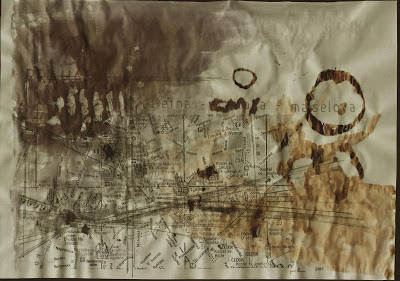 JAKOB ULLMAN.COM


15.5.13



15.4.13
Felix Kubin interview for 06:00am

Felix Kubin foto by Evelyna Domnitch
06: A definition of
yourself.
I am an early
reflection.
06: If we don't act
with immediacy, capitalism will become our executioner?
It’s the other way
round. Capitalism forces us to act faster than we can think and
consume more than we can swallow. It compresses time so much that
there is no contemplation in work, no time to let the particles
settle that were thrown on the surface of the water. Life needs time.
Art needs time. Love needs time. We have to claim back time and
public space. Also, capitalism doesn’t judge the inner quality of
things, it only judges their immediate sales value. In its most
perverted (or maybe purest) form, capitalism means earning money with
money. This is incest and it leads nowhere.
06: Free time is
something we have to work for?
We have to buy
free time, unless we decide to drop out of the (working) society and
become hermits. Some people do that, and they are courageous. I am
not a hippie, though. I like taxis, modern buildings, vacuum cleaners
and elevators. I want to live in a modern world but detached from ist
daily rhythm, more like a ghost.
06: Why did Orpheus
turn and look at Euridice just before the exit?
In my radio play
version „Orphée Mécanique“ he didn’t look back. Actually, he
entered the underworld without finding Eura (he only found her
projection). And after he left Hades, he forgot where he was, so he
entered again. But in the original version he turned around because
he heard no sound behind him. We need sound for evidence. When I saw
my dead father lying on the floor, his silence was much more
horrifying than the way he looked.
06: How do you
perceive the rise of extreme right wing parties in Europe, that is
accompanied by a corresponding rise of extreme right wing parties in
Greece?
When the economy
gets bad and people have to struggle with poverty, right wing (or
extremist) parties always get strong. That seems to be a phenomenon
of history. Of course, the situation in Hungary and Greece worries
me. But most of all I am worried about Russia. It seems that they are
light years away from Glasnost and Perestroika.
06: Are radio
transmissions today as important as they were in the past? In which
ways?
Transmissions are
always important! Let’s just forget about commercial radio for a
second. I think that the ideal of radio has become more
important than ever. For me, radio can be a synonym for quality
journalism, in-depth features, radio plays, alternative music
programmes and experimentation with transmission in general. Of
course, hardly anyone listens to radio by antenna nowadays, only
people in cars do that. We mostly listen by internet and usually turn
on the radio randomly. We don’t care about the programme schedule.
There are some decent radio programmes on internet but most of them
lack something that public radio has: money. At the end of the day,
you need to pay a radio maker, so (s)he can take time to make
a good research. You need to pay the staff of a radio play
production: the author, the director, the musician, the actors and so
forth. And you need to pay the moderator, so he can prepare
for the programme. All of these paid people shall not be controlled
by a private company that is only interested in sales figures. They
shall be paid for work that is serving public interest, education and
a free spirit of culture. Having said that, the democratization of
internet has produced a lot of blogs and mini radio stations with
some brilliant perls amongst them. But on the long run I really
believe that it’s necessary to be paid for quality work, at least
if you want to keep a sustainability. This counts for artists and
musicians, too. Otherwise it stays a hobby.
06: What has been
your experience working with Christoph Schlingensief like?
I had met him few
times 10 years ago. Back then, I only compiled some classical music
for his theatre play „Atta Atta“, so I wasn’t involved too much
in the creation of the play. Few years ago, he wanted me to compose
music for his play „Eine Kirche der Angst vor dem Fremden in mir“
(„a church of fear of the alien in me“ – actually, the title is
hard to translate). But his request came too short in advance of the
rehearsals, I couldn’t do it. I think, one year later he died. I
always liked his ability to bring people together and create a riot
or protest. I liked his interfering with public spaces. He wasn’t
afraid of any confrontation. However, I didn’t like his aesthetics
very much. He was more an instigator than an artist to me.
06: Can you describe
what has been in your life your relationship with the dancefloor.
I have no special
relation to dancefloors. Dancefloors mostly create reproduction. They
are as much overrated as DJs. I like the idea of a club that creates
world, surprising, surreal and independent from the outer world. It
needs a lot of creative audience to achieve that, no consumers. I
don’t like DJs who play only one style of music and only care about
how they can please the crowd. They should rather go into politics
then. Parliaments should be dancefloors, DJs should be conductors,
dancefloors should be auditoriums.
06: What would you
like to do in the future?
I want to work with
foley artists and create a composition for a cursing choir.
06: Can you send us
a picture of you, of a place or of something else that best
illustrates your current state of mind?
I attached a foto
that Evelyna Domnitch took of me in Amsterdam in her sci-fi lab.
3.4.13
Εγγραφή σε:
Αναρτήσεις (Atom)